
Larry Rivers
 American
|

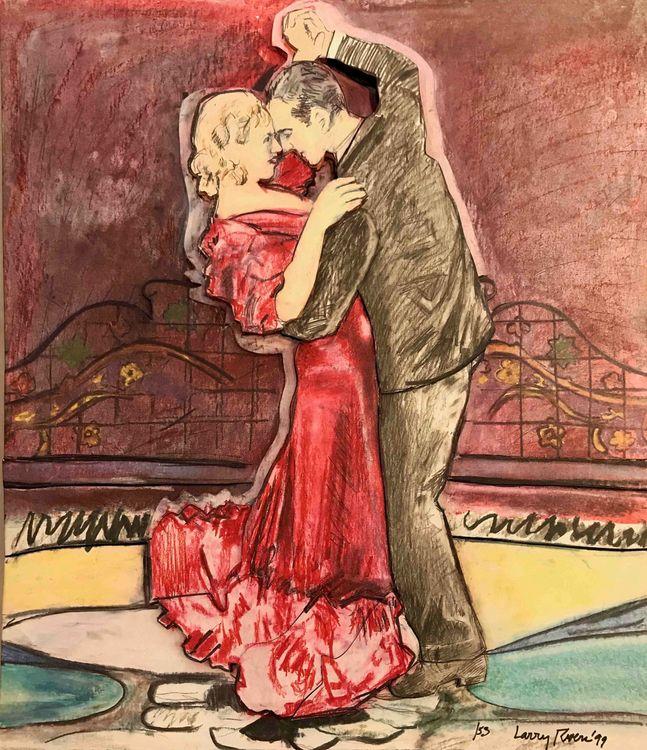
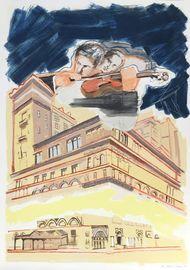
Larry Rivers (1923–2002) was a pivotal figure in postwar American art, known for bridging Abstract Expressionism and Pop Art while challenging the conventions of both. Trained as a jazz saxophonist before turning to painting, Rivers brought improvisation, rhythm, and irreverence to his visual practice. His work reintroduced recognizable imagery and narrative at a moment when abstraction dominated, often depicting historical figures, popular icons, and art-historical subjects with a loose, energetic hand.Rivers’s paintings, drawings, and sculptures are characterized by expressive line, fragmented composition, and a deliberately unfinished quality that underscored process over polish. Blending text, figuration, and painterly gesture, he infused his work with wit, skepticism, and a distinctly American sensibility. His practice expanded across media to include printmaking, film, performance, and poetry, reflecting his restless experimentation and interdisciplinary approach.Throughout his career, Rivers exhibited widely and was the subject of major retrospectives at institutions including the Whitney Museum of American Art and the Solomon R. Guggenheim Museum. His work is held in the permanent collections of the Museum of Modern Art, the Metropolitan Museum of Art, the Art Institute of Chicago, and numerous other international museums. Today, Larry Rivers is recognized as a crucial transitional figure whose work helped redefine the possibilities of figurative art in the second half of the 20th century.