Betye Saar
 American
|

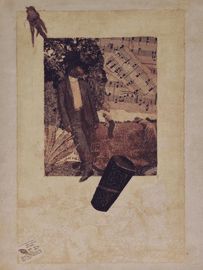
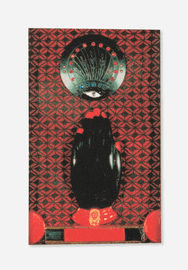
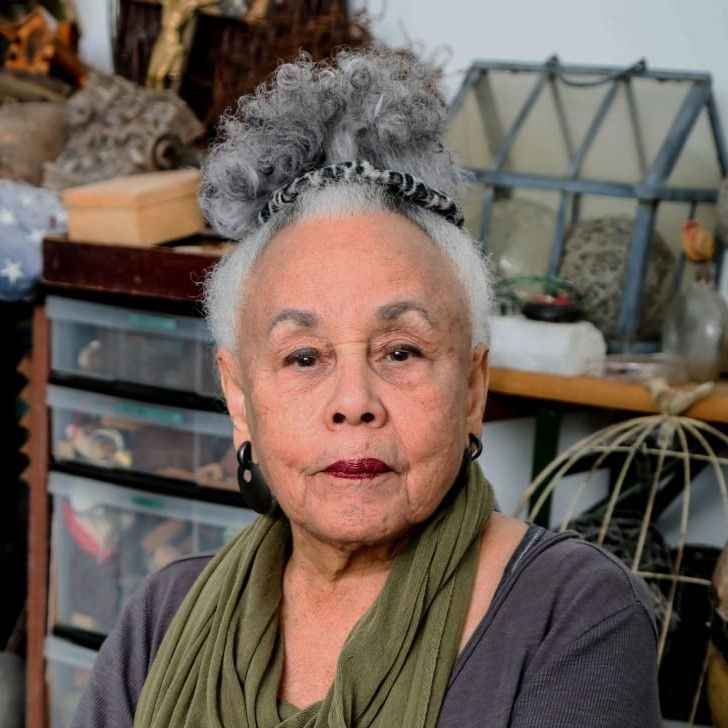
In Betye Saar’s work, time moves in cycles. History, experience, emotion, and knowledge loop backward and forward, binding the artist and her viewers to generations past. This cyclical understanding of time is evident in Saar’s continued engagement with certain motifs, symbols, and found objects—elements she revisits and reinvents throughout her career. “I can no longer separate the work by saying this deals with the occult and this deals with shamanism or this deals with so and so…. It’s all together and it’s just my work,” she reflected in 1989.Born in Los Angeles and raised in Pasadena, California, Saar initially studied design at the University of California, Los Angeles—a field often suggested for women of color who sought creative careers, given the pervasive racism and sexism of the time. She later turned to printmaking, producing her earliest works on paper. Using the soft-ground etching technique, she pressed stamps, stencils, and found materials into her plates to capture their textures and forms. Her early prints, such as Anticipation (1961) and Lo, The Mystique City (1965), reveal her deep interest in spirituality, cosmology, and family.A transformative moment came in 1967, when Saar visited an exhibition of Joseph Cornell’s assemblages at the Pasadena Art Museum. Cornell’s poetic constructions of found objects profoundly influenced her, inspiring her to build her own assemblage boxes. She began integrating her prints and drawings into window frames—most notably in Black Girl’s Window, an autobiographical work that marks a turning point in her engagement with race and contemporary politics.In the wake of Dr. Martin Luther King Jr.’s assassination, Saar’s art became more explicitly political. Her once-mystical assemblages evolved into radical acts of reclamation. By repurposing washboards, jewelry boxes, and racist memorabilia, she transformed objects of oppression into symbols of resistance. In her most renowned work, The Liberation of Aunt Jemima (1972), Saar reimagines the stereotypical Mammy figure as a revolutionary—armed with a rifle and a hand grenade—confronting both physical violence and the insidious harm of racist imagery.Saar’s practice also draws deeply on personal and familial history. In Keep for Old Memiors (1976), she incorporates fragments of letters and photographs saved by her great-aunt Hattie, framed by a pair of women’s gloves that evoke the tactility of memory and touch. Such works invite intimate engagement; their domestic scale and personal symbolism encourage viewers to reflect on their own connections to the past. “To me the trick is to seduce the viewer,” Saar has said. “If you can get the viewer to look at a work of art, then you might be able to give them some sort of message.”Across more than six decades, Saar has continued to create art that honors, critiques, and reimagines the familiar while probing the mysteries of the unknown. “It may not be possible to convey to someone else the mysterious transforming gifts by which dreams, memory, and experience become art,” she has written. “But I like to think that I can try.”