Alexander Calder
 American
|

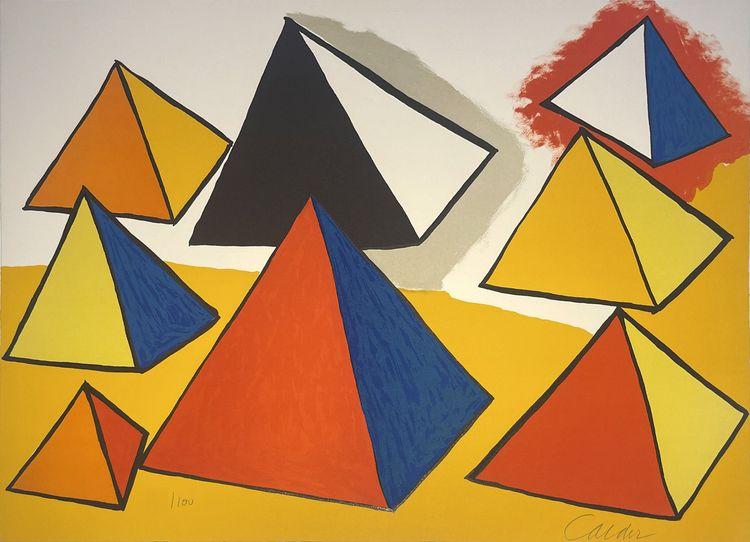
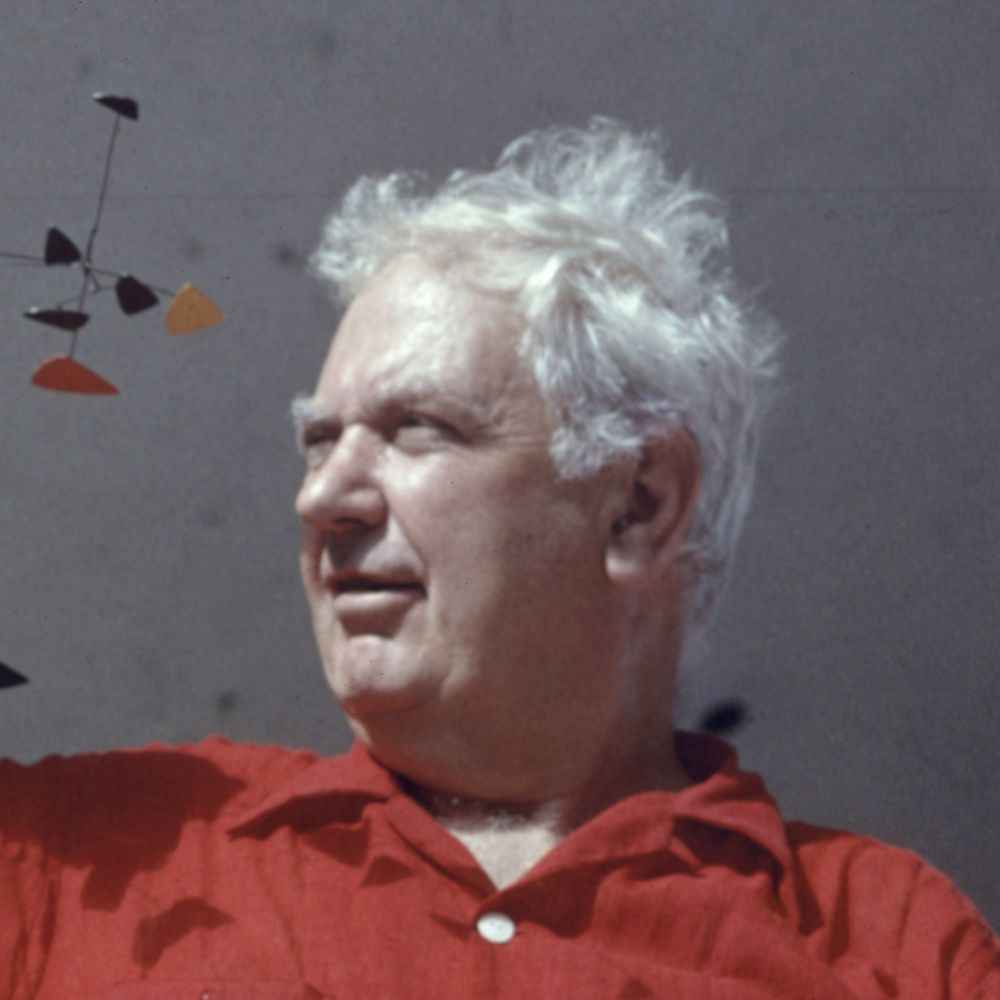
Alexander Calder revolutionized modern art through his pioneering three-dimensional kinetic sculptures, which Marcel Duchamp famously dubbed “mobiles.” Drawing on the principles of Futurism, Constructivism, and early non-objective painting, Calder’s mobiles feature boldly colored abstract forms made from industrial materials and suspended in delicately calibrated, lyrical balance. Animated by air and gravity, these works introduced movement as a central expressive element in sculpture. During his lifetime, Calder achieved extraordinary international acclaim. He represented the United States at the 1952 Venice Biennale, where he was awarded the Grand Prize for Sculpture, and he received numerous honors, including the French Legion of Honor and the American Presidential Medal of Freedom. His work has been the subject of major solo exhibitions at institutions such as the Museum of Modern Art, the Rijksmuseum, the Louisiana Museum of Modern Art, and the Museo Reina Sofía. Today, Calder’s sculptures regularly command eight-figure prices on the secondary market.Although best known for his mobiles, Calder maintained a remarkably wide-ranging practice that also included standing sculpture, painting, stage sets and costumes, monumental public installations, and jewelry—demonstrating a restless inventiveness that extended far beyond the works for which he is most famous.