
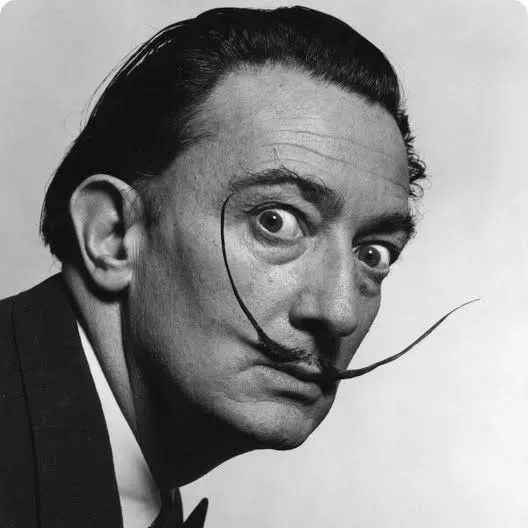
Salvador Dali
 Spanish
|

Salvador Dalí was one of the defining figures of Surrealism, the 20th-century avant-garde movement dedicated to unlocking the creative power of the unconscious through dreamlike and often disquieting imagery. Through an expansive body of work that encompassed prints, paintings, sculpture, film, and writing, Dalí helped shape and popularize the visual language of Surrealism itself. Drawing on psychoanalytic theory, particularly the ideas of Sigmund Freud, Dalí conjured fantastical creatures and destabilized landscapes that oscillate between seduction and unease. His 1931 painting The Persistence of Memory, with its melting clocks suspended in an eerily still environment, stands as one of the most instantly recognizable artworks in the history of modern art. During his lifetime, Dalí exhibited extensively around the world, achieving both critical and popular acclaim. His works are held in major museum collections, including the Tate, the Museum of Modern Art, and the Art Institute of Chicago. Today, his art continues to command multimillion-dollar prices on the secondary market, underscoring his enduring influence and global appeal.