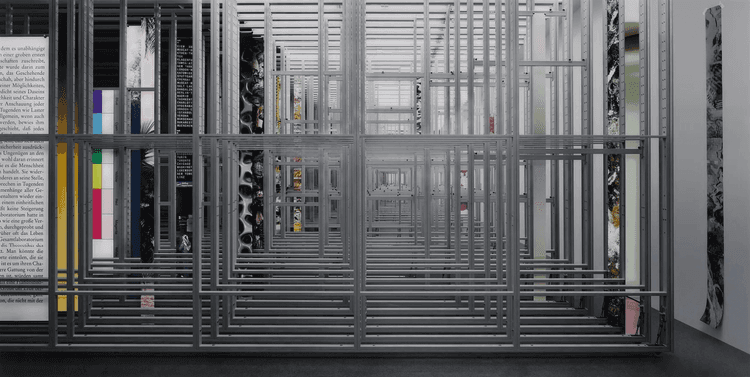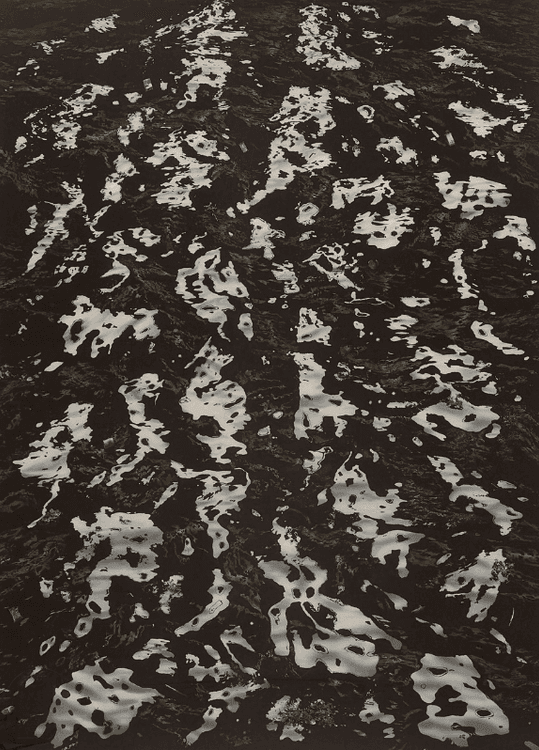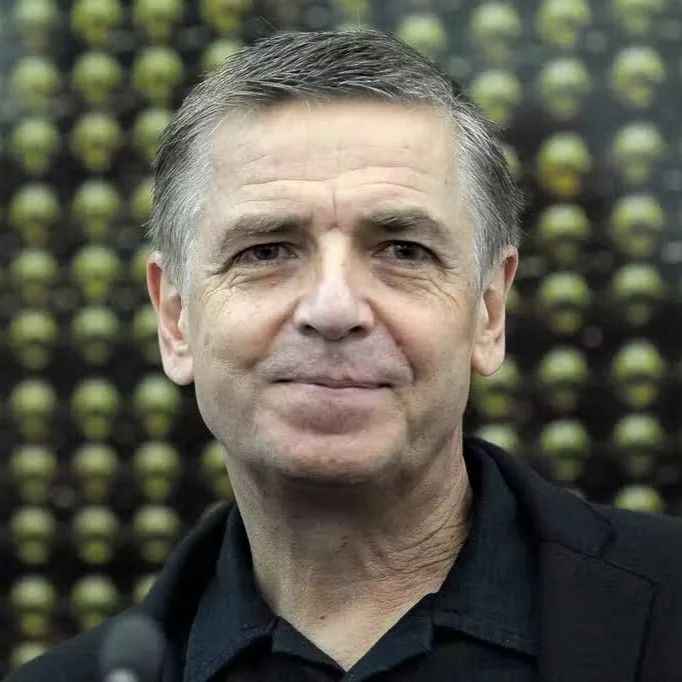

Andreas Gursky (born 1955, Leipzig, East Germany) moved with his family to West Germany in 1957, settling in Düsseldorf. Though his parents owned a photography studio, Gursky initially pursued other paths—studying at the Folkwangschule, Essen (1978–80) and driving taxis—before entering the Kunstakademie Düsseldorf in 1980 at the urging of Thomas Struth. There he studied under Bernd and Hilla Becher and began working exclusively in color, establishing his distinctive visual approach.His early series Pförtnerbilder (1981–85), featuring uniformed security staff, debuted at Düsseldorf Airport in 1987. By the mid-1980s, Gursky was exploring contrasts between nature and industry in the Ruhr Valley and documenting groups at leisure. After earning his diploma in 1987, he held his first solo show at Galerie Johnen & Schöttle, Cologne (1988), followed by a museum exhibition in Krefeld (1989).As the 1990s brought global recognition, Gursky photographed urban and industrial sites worldwide—from Tokyo to Los Angeles—and collaborated with Siemens (1991–93). Increasingly large-format prints and digital manipulation defined his evolving style; by 2000, he was combining negatives to create panoramic, digitally constructed works such as Stockholder Meeting (2001).Major retrospectives followed at Deichtorhallen Hamburg (1994), Kunsthalle Düsseldorf (1998), and MoMA (2001), with later exhibitions in Basel and Munich (2007). His work has appeared in the Venice Biennale, Sydney Biennale, and numerous international venues. Awards include the 1988 Förderpreis des Landes Nordrhein-Westfalen, the 1998 Citibank Private Bank Photography Prize, and the 2001 ICP Infinity Award.Since 2002, Gursky has lived and worked in a former Düsseldorf power station redesigned by Herzog & de Meuron.